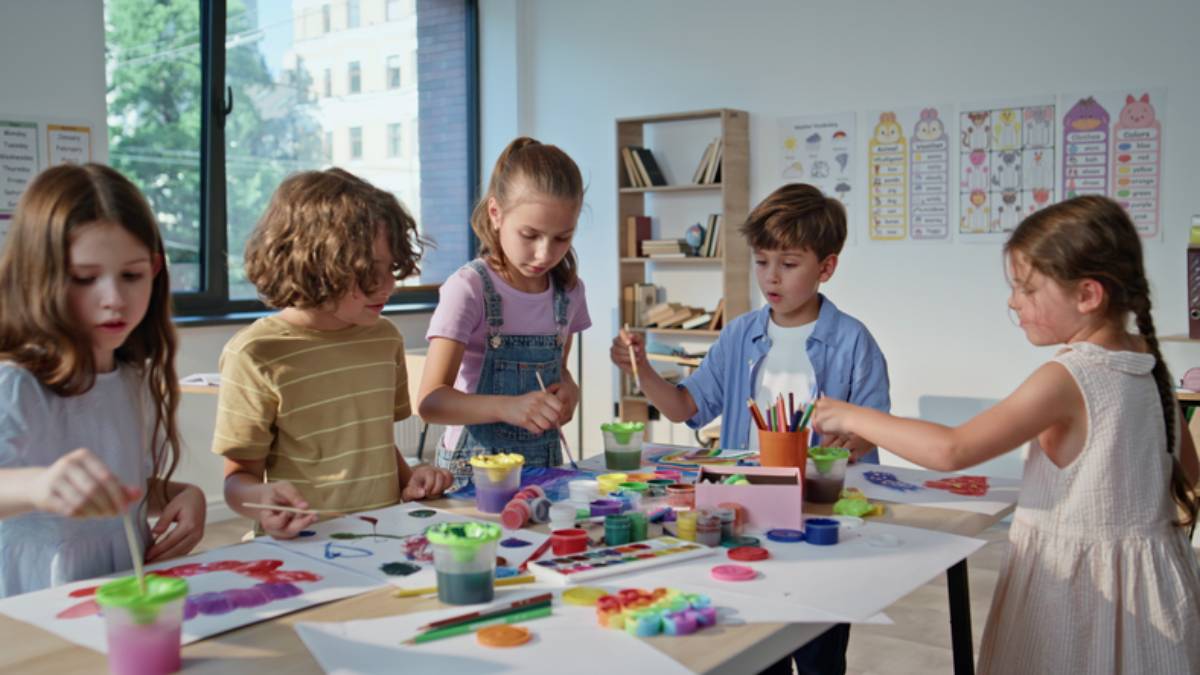
Young children often need frequent adult interaction to stay focused and on task. Educators can provide that much-needed one-on-one interaction in a smaller class setting. This smaller-group dynamic allows teachers to spot their students’ individual needs. Children often feel more included in smaller class sizes because they have more opportunities to be part of the group and answer questions more frequently, supporting their academic growth. A quality Montessori Academy or preschool program understands the benefits of small class sizes in early childhood education, and staff and educators work to make that happen. Your child can still get a quality early childhood education in a larger classroom; what matters is understanding which setup will work best for how your child learns.
More Individual Attention
In a smaller class setting, teachers and educators more effectively observe language, behavior, and skill development. When a question arises, it’s easier to answer it before frustration begins. One of the primary benefits of smaller class sizes is the adaptability to work with children at different levels of understanding and development. Teachers can spot when a child is struggling and step in to help, proactively creating a positive learning environment for all students, staff, and educators. Teachers can catch early signs of struggle and adjust in ways that suit each child’s learning style. They can also see where a child has particular strengths and can offer them greater challenges when it is time.
Stronger Teacher-Child Relationships
With fewer students, teacher-child relationships often develop stronger than in larger settings. Teachers have more chances for one-on-one interaction when they aren’t monitoring a large number of students. Smaller groups create more consistency and familiarity. Teachers can learn each student’s routines, interests, and communication style to better individualize curriculum and pacing. Larger class sizes don’t mean strong teacher-child relationships can’t be developed; smaller classes just help ensure each student gets the same opportunity to do so without feeling like they are competing for attention.
Calmer Learning Environment
Fewer children means fewer competing voices and interruptions. No one feels like they need to speak over another or cause disruptions to get a question answered. Teachers can implement rules and classroom procedures more easily on a smaller scale, and children are more likely to follow them when there aren’t so many peers to distract them. They can respond to conflict in real time because even in the calmest classroom, difficulties will still arise. Children have more space to work with hands-on materials and move around without bumping into furniture or peers. Smaller groups also make transitions smoother and easier to organize. Smaller groups also create more opportunities for classroom job rotations, which often leads to more positive behavior.
Better Support For Independence
With the proper support, children often thrive. In a smaller classroom, teachers can better demonstrate a task, then step back and give students room to try it on their own. They don’t feel rushed to complete work, and a good Montessori Academy prioritizes independence and self-autonomy within safe and practical limits. Children have the freedom to take risks within carefully thought-out parameters meant to build skills that will be useful throughout their lifetime. When children are given opportunities for self-determination, they gain confidence and competence that lasts.
Schedule a tour to see how our small classroom sizes help support attention, a calmer school experience, and stronger teacher-student relationships.